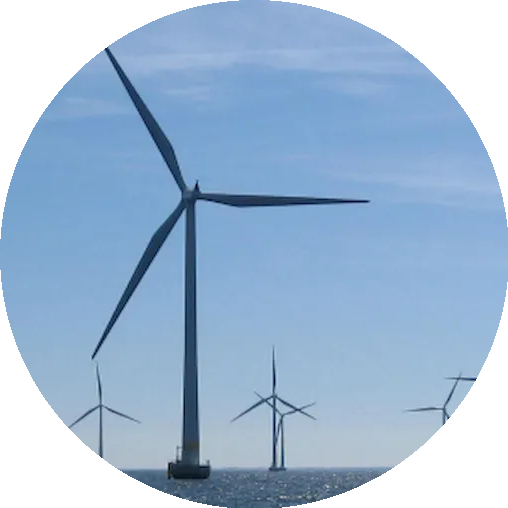
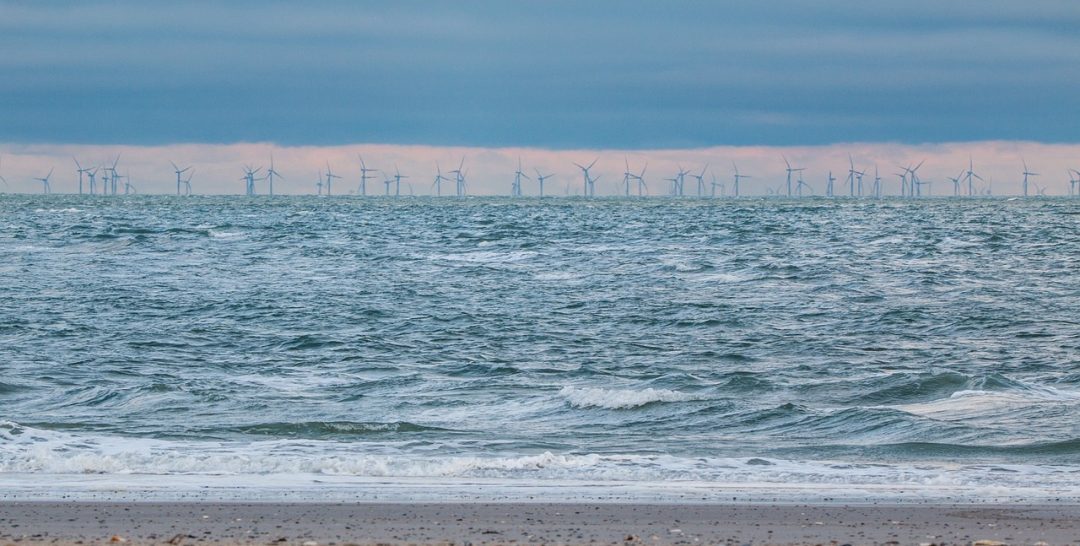
The project aims to assess and prioritize the medium-term proposed offshore renewable energy areas in Greece, identified by the Hellenic National Program (www.herema.gr). These are 10 medium-term development areas (until 2030-2032) with an extent of 978 km2 and a total estimated capacity of 4.9 GW. The final objective is via this assessment to facilitate Greece’s transition toward a low-carbon economy and enhance sustainability across environmental, social and economic dimensions. The methodology used will include a comprehensive approach to assess and evaluate the proposed offshore renewable energy areas.
Initially, an extensive literature review will be performed collecting information regarding various criteria used in offshore wind farms (OWF) sitting along with Norway’s OWF deployment experience. Data collection from diverse sources will be stored in a geospatial database developed for that purpose. Conflicts among maritime activities will be performed and application of multiple criteria analysis will rank the proposed OWF sites based on socio-economic, environmental and technico-economic indices considering the minimization of the environmental impact and the optimization of the socio-economic one. Stakeholders’ engagement will involve local communities, interested groups and the wider public through questionnaires, workshops and educational seminars. The outcome will be a report where the applied methodology and the evaluation / ranking results regarding the suitability of proposed OWF areas will be documented.
The results will be delivered to the Secretary General of the Aegean and Island Policy, Ministry of Maritime Affairs and Insular Policy in Greece as well as other relevant authorities in order to support efficient policy planning contributing to an appropriate Marine Spatial Planning and Integrated Coastal Zone Management. In addition, disseminating the findings among research institutions and universities will contribute to the improvement of methodologies related to the sitting of OWF while involving local businesses and community associations will support a comprehensive coastal management.
The collaboration with Norway’s institute (Norwegian University of Science and Technology, Faculty of Engineering (IV), Department of Marine Technology) will facilitate knowledge exchange, supporting project execution and paving the way for future scientific collaborations.